
Practical guide
Decide what to gather before your first wrap inquiry
Separate information that helps the conversation from decisions that can be made with a supplier.
Read the guide: Decide what to gather before your first wrap inquiryChicago commercial vehicles & fleets
Bring your business message, vehicle and available files into focus. See what is ready and what needs a conversation before pricing.
Guaranteed response within 2 hours.Free planning tools and buyer downloads below.
A clear scope before the spend.
Free first wrap readiness check below. Use the result with any wrap shop.
More useful project detail
Find the missing information, prepare a useful first inquiry and understand what needs approval before production.

A visual you can keep
Find the next useful action without pretending everything is production-ready.
Use the planning example from Chicago Fleet Wraps, download a copy, or read the related project guides.
Practical guide
Separate information that helps the conversation from decisions that can be made with a supplier.
Read the guide: Decide what to gather before your first wrap inquiryPractical guide
Inventory the files you have and keep approval, usability and production readiness as separate questions.
Read the guide: Hand over brand files without guessing what is print-readyPractical guide
Use a clear sequence for scope, vehicle reference, artwork and actual scheduling.
Read the guide: Understand the approvals before the first installationWhy put your business on a vehicle?
Gather the vehicle details, brand files and message that make the next conversation useful.
Choose the business name, main service and contact route before adding a long list.
Keep the approved wording and artwork reference for the next vehicle.
A clear scope before a price
Vehicle size, covered areas, artwork, preparation, existing graphics and the proposed material system all belong in the price discussion.
Useful when the priority is a clear name, service and contact route.
Discuss this scopeCompare the exact panels, message and finish with the full-coverage option.
Discuss this scopeConfirm the included painted panels and any exclusions on the actual vehicle.
Discuss this scopeRequest a price for the actual vehicles and agreed coverage. The free tools below help you compare the assumptions.
Picture the possibilities
Look at the message, the coverage and the working views.
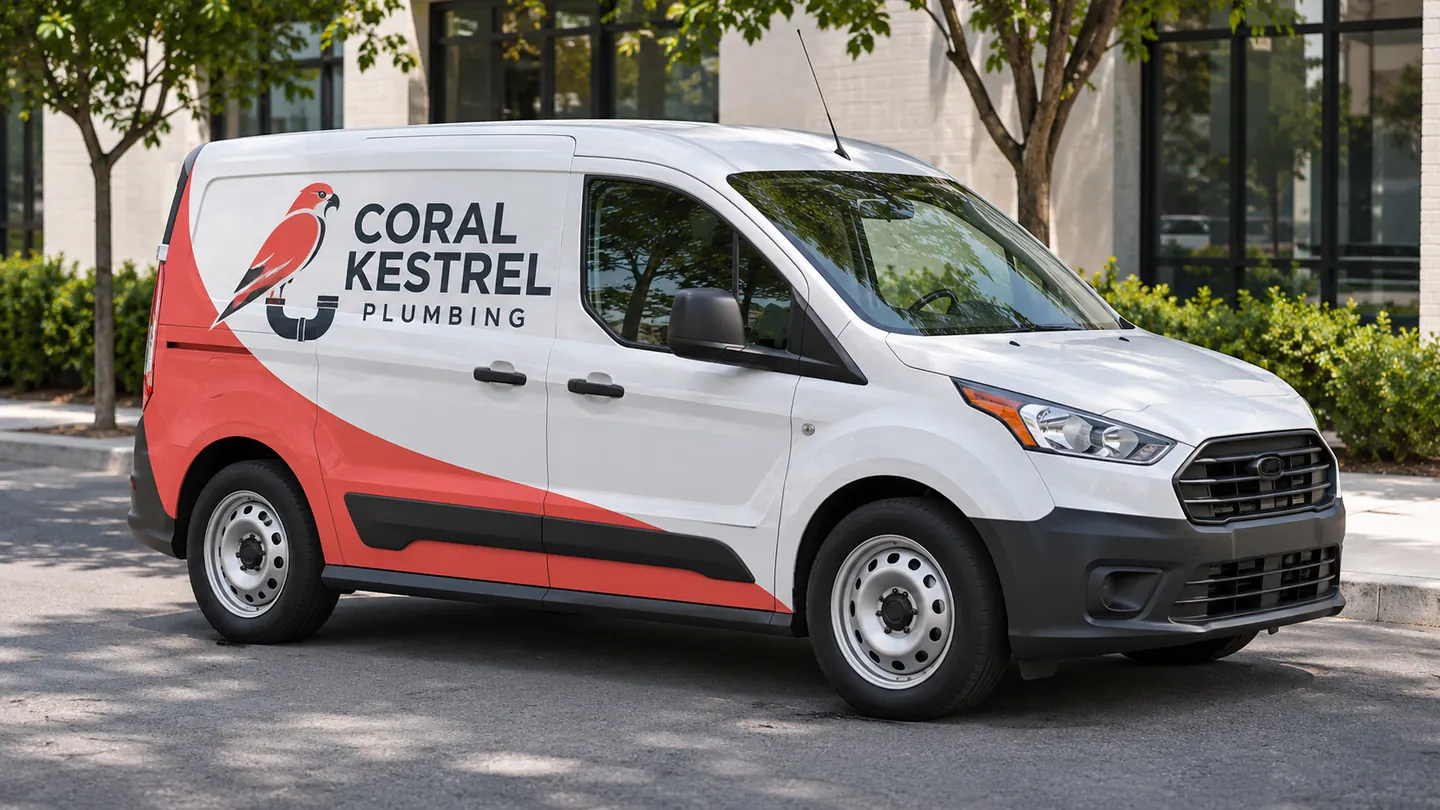
Coral Kestrel Plumbing is a fictional business. These generated design concepts illustrate ideas to discuss for your vehicles.
Plan the graphics for your vehiclesLet’s talk vehicles
Tell us how many vehicles you have. We’ll follow up about the vehicles, coverage, design and timing.
Guaranteed response within 2 hours.Know the next step
Guaranteed response within 2 hours. Final project pricing and dates follow review of the scope.
Name, email, phone and vehicle count. Share the project context through the free tool if it is useful.
Discuss the actual vehicles, coverage, artwork, existing graphics and timing.
Check the written scope and vehicle-specific artwork, including the business wording and included surfaces.
Confirm scheduling, preparation, review and the applicable care information.
The free tool
Use the example values to explore, then replace them with your project details.
Use the tool without sharing contact details. Entering a valid email or phone in the inquiry form saves your project entries, filenames, analysis and selected original files, even if unfinished. Original files: up to 50 MB each and 200 MB per batch.
Start with the missing vehicle information and decisions.
| Item | Your status | Next action |
|---|---|---|
| Exact vehicle details | Missing | Collect this information |
| Current vehicle photos | Missing | Collect this information |
| Logo files | Ready | Bring the current record |
| Approved wording | Undecided | Make or discuss this decision |
| Coverage | Undecided | Make or discuss this decision |
| Approval owner | Ready | Bring the current record |
Readiness is based on your answers. It is not a production approval or a requirement to request help.
Ready to discuss the vehicles? Get fleet pricing. Save your result to use in that conversation.
Free tools for a better buying decision
A 12-page workbook with generic wrap concepts and fillable worksheets for coverage, quote comparison, budget, fleet availability, artwork, proof approval and vehicle records. Use it with any wrap shop.
Fill it in electronically or print it. No email needed.
Take this to any wrap shop
Print it off so you remember to ask. A practical checklist covering scope, materials, artwork, preparation, scheduling, warranty and handoff, plus questions for this project.
Confidence comes from the details
Use these checks when you review a proposal, a proof or a wrap shop. Keep the answers with your project.
Print the wrap-shop questionsSee the tradeoff
A project with a logo but no vehicle photos gets a photo-gathering action before detailed artwork review.
Illustrative values, not a completed customer project.
Start with the missing vehicle information and decisions.
| Item | Your status | Next action |
|---|---|---|
| Exact vehicle details | Missing | Collect this information |
| Current vehicle photos | Missing | Collect this information |
| Logo files | Ready | Bring the current record |
| Approved wording | Undecided | Make or discuss this decision |
| Coverage | Undecided | Make or discuss this decision |
| Approval owner | Ready | Bring the current record |
Readiness is based on your answers. It is not a production approval or a requirement to request help.
Leave with something useful
Check the vehicle details, artwork and project decisions so you know the next useful step.
Check my project readinessBuild it from the project details you enter.
Keep the assumptions and open questions visible.
Copy, save or print the result for your next conversation.
Commercial wrap service
For a first commercial vehicle wrap, prepare the business message, collect your current artwork, and identify realistic vehicle availability. Share the number of vehicles in your initial inquiry. Keep model details and photos ready so coverage, preparation, and the next planning steps can be discussed.
Your first commercial wrap project does not have to begin with a finished design. It can begin with three concrete decisions: what the vehicle should say, which files already exist, and when the business can make the vehicle available. This guide helps an owner or office manager turn a loose idea into an organized inquiry. It applies to vehicles used for business, including company cars, work trucks, service vans, and small fleets.
Write a plain sentence explaining what your business does and who it serves. Then identify the company name, service category, and contact method that must appear on the vehicle. Trying to include every service, qualification, promotion, and social account can make the brief difficult to prioritize. Treat those items as choices to discuss, not automatic requirements. If the vehicle supports several lines of business, decide which one should lead before asking for artwork. This creates a useful foundation without prescribing a specific visual design.
Search your existing business files for the logo, brand colors, type guidance, and examples of current marketing material. Record where the files came from and whether your team knows which version is current. A screenshot can help explain an idea, but it is different from the original artwork used to build a production file. If files are missing, say so during the discussion. The goal is to identify what is available and what needs attention before anyone assumes the project is ready for approval.
Think about vehicle availability before choosing a desired completion date. A work vehicle may have customer visits, deliveries, equipment transfers, or driver assignments that need coordination. Identify dates that are preferences and dates tied to a specific business event. Share constraints without treating an unconfirmed date as a booking. Ask what vehicle details and preparation information are needed before arrangements can be agreed. A practical calendar discussion helps everyone understand the business impact of taking the vehicle out of its normal routine.
Buy with the questions answered
You can start with the business message, vehicle details and any brand files you already have. Identify missing artwork or undecided coverage so that design work can be included clearly in the scope.
Guaranteed response within 2 hours. The next conversation confirms the vehicle details, proposed coverage, artwork, existing graphics and timing so a project-specific scope can be discussed. Sending an inquiry does not reserve an installation date.
Review the covered surfaces, final business wording, vehicle-specific artwork, proposed material system, preparation and removal needs, price exclusions and agreed handoff. The free wrap-shop questions give you a record to use with any supplier.
Before you decide
For project-specific help, use the four-field inquiry form.
Get fleet pricingNo finished concept is necessary to explain your business needs. Start with the company name, services, contact priorities, and any existing brand materials. State which decisions are open. That allows the next conversation to focus on the design information and vehicle details still needed.
Read the detailed guide: Decide what to gather before your first wrap inquiry
Tell the project contact what you have, whether it is a website image, an old document, or a previous print file. Keep those references organized. Ask what additional artwork work may be required rather than assuming every existing image is suitable for the proposed graphics.
Read the detailed guide: Hand over brand files without guessing what is print-ready
You can begin the inquiry while gathering information. Explain any equipment, racks, or existing graphics that affect the project, and ask about preparation expectations before the agreed vehicle handoff. Do not remove equipment or graphics solely because you assume that step is required.
Read the detailed guide: Understand the approvals before the first installation
A business can discuss lettering, partial coverage, or broader graphics according to its communication needs. Identify the essential message and the vehicle areas you want to consider. The conversation should establish an appropriate scope rather than assume every first project requires the same treatment.
Read the detailed guide: Decide what to gather before your first wrap inquiry
Give the business name, primary service and a useful contact method a clear order. Concise fleet messaging helps the most important information stand out.
3M sourceContamination and trapped moisture can undermine adhesion. Seams, crevices and areas beneath seals need attention as part of the final cleaning and drying process.
ORAFOL sourcePreparation, coverage, vehicle shape, existing graphics and the installation team affect downtime. Obtain a project-specific schedule before committing vehicles to a fleet rollout.
3M sourceUnpainted or textured plastic, rubber and silicone need separate evaluation. 3M's vehicle guidance excludes or limits several of these surfaces for the films covered by that guidance.
3M sourceIf your business operates in Chicago, share where the vehicle is normally based and confirm project logistics during follow-up. Tell us about your vehicles.